

Ahoy Crew,
Have you ever seen a river that rises so high it flows over its banks and onto roads and fields? That’s a flood, and it happens when a river carries more water than its channel can hold. When that happens, it spills over the sides—or embankments—and spreads out across the land.
But why does this happen? Let’s find out!
🏞️ What Is an Embankment?
An embankment is like a wall that helps keep a river in place. It might be natural, made of soil and vegetation, or man-made, built with rocks or concrete to prevent flooding.
When the water level in a river rises too high—because of rain, melting snow, or blocked flow—the embankments can no longer hold it back, and the river floods.
🌧️ Common Reasons for River Flooding:
- Heavy Rainfall
When lots of rain falls quickly, it flows into rivers faster than they can carry it away. The water level rises, and soon the river overflows. - Melting Snow and Ice
In colder places, spring melt from mountains or glaciers can send a huge surge of water into rivers downstream. - Storm Surges
Tropical storms or cyclones can push seawater into rivers near the coast, backing up the flow and causing flooding upstream. - Blocked Waterways
Natural debris like fallen trees or ice jams can block a river and force water to spill over its banks. - Deforestation and Urban Growth
Trees help absorb rainwater. Without them, water runs quickly into rivers, and concrete roads prevent the water from soaking into the ground—so flooding becomes more likely.
📍What About Thailand?
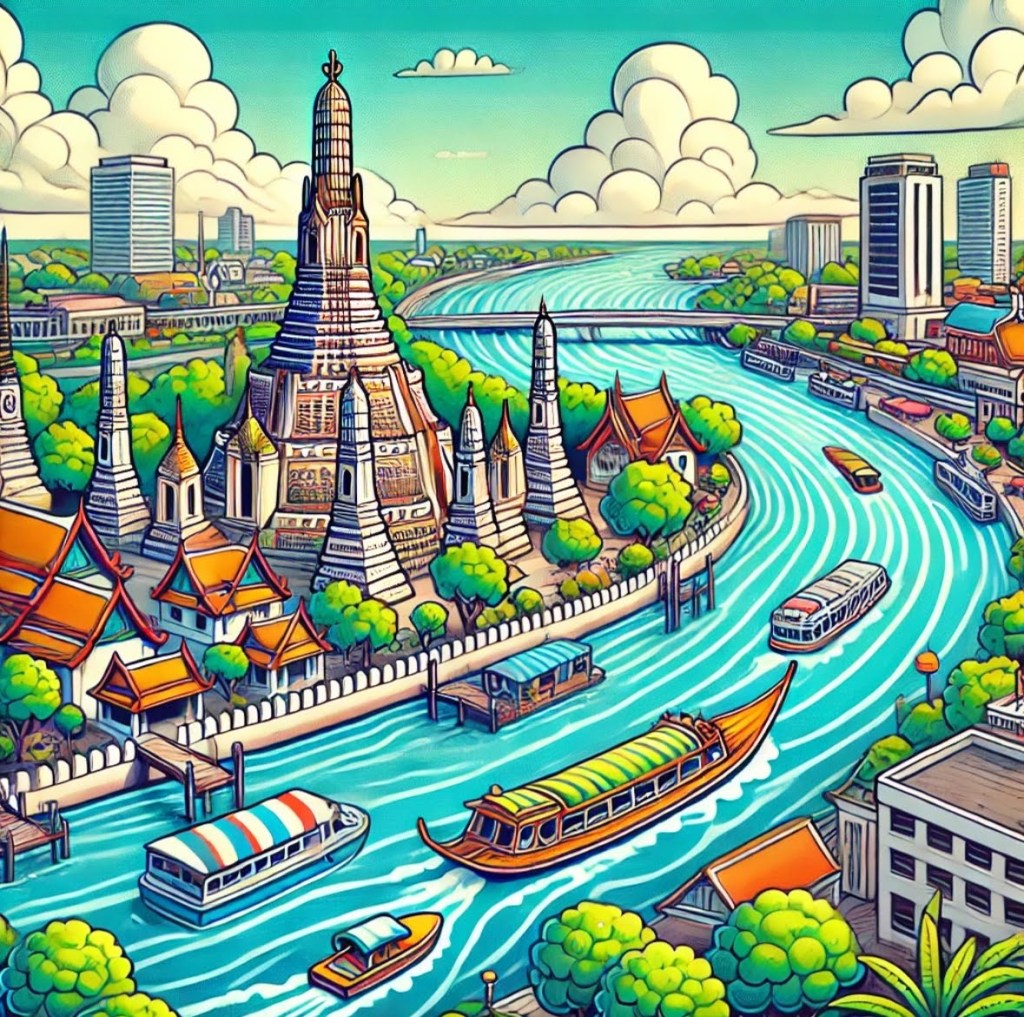
Thailand is shaped by its rivers—especially the Chao Phraya River, which flows through Bangkok, and smaller rivers across the central plains and rural countryside.
During the rainy season (June to October), Thailand receives monsoon rains, which cause rivers to swell and sometimes overflow. Flooding isn’t unusual—but people have learned to live with the water, not just fight it.
🏡 Life Above the Water: Stilt Houses
In rural areas and river communities, you’ll often see traditional Thai houses built on stilts. Why?
- Protection from flooding: When rivers rise, the house stays safe above the water.
- Cooler living spaces: Breezes can flow under the house, keeping it cooler in the hot season.
- Room for storage or animals: The area under the house is often used for storing boats, tools, or raising chickens!
These wooden stilt houses often have steep roofs to help rain run off quickly and are made from local materials like teak or bamboo. Some even have boats tied underneath, ready for high water!
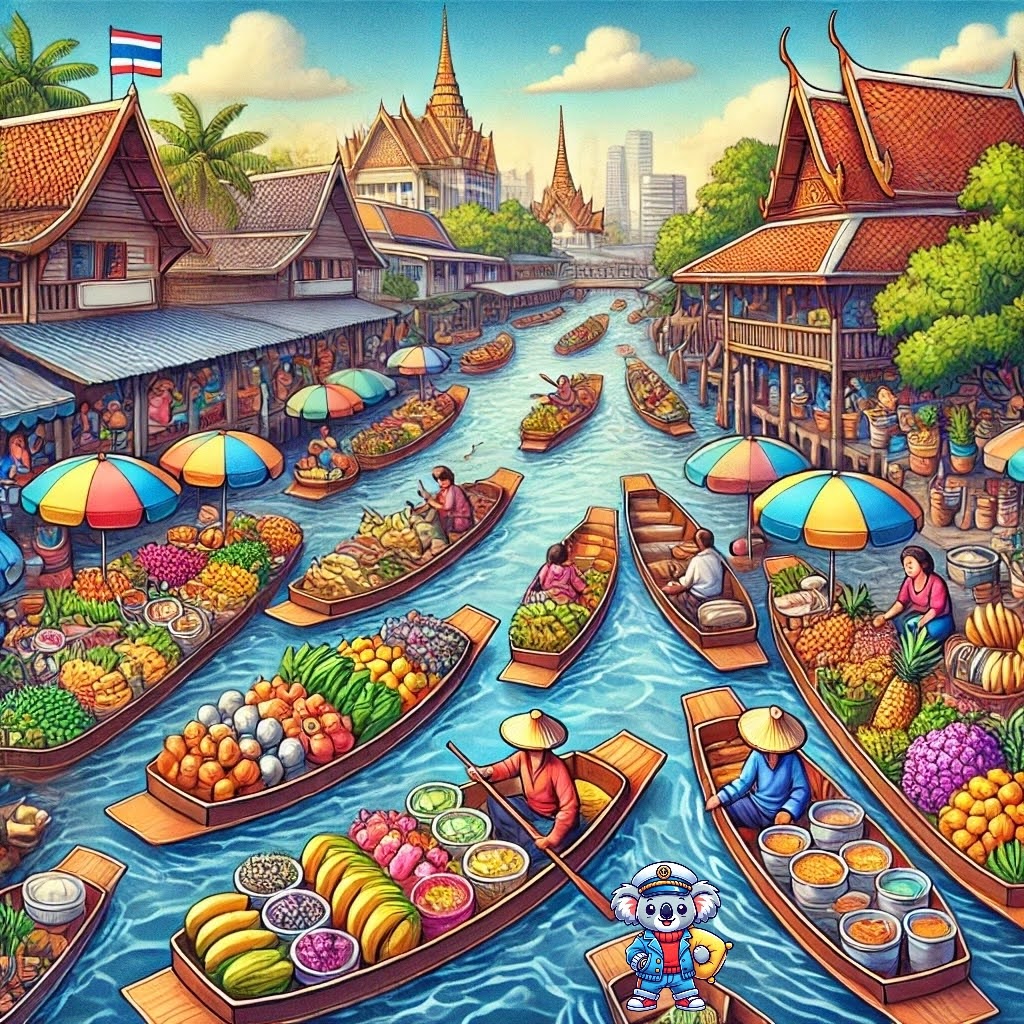
In Bangkok and older canal towns, you might also spot floating markets, where boats serve as moving shops—a reminder of how deeply rivers are part of Thai daily life.
💡 So, Why Do Rivers Flood?
Flooding happens when nature sends more water than usual—and it’s something many communities around the world have adapted to with smart design, ancient traditions, and resilient living.
See you tomorrow,
– Captain PillowBelly

 Captain Pillowbelly's Adventures