
Ahoy Crew,
Look at a world map and you’ll notice something surprising:
Some countries are so small, they look like a single city!
Welcome to the fascinating world of city-states and microstates—tiny countries packed with history, culture, and geography lessons.
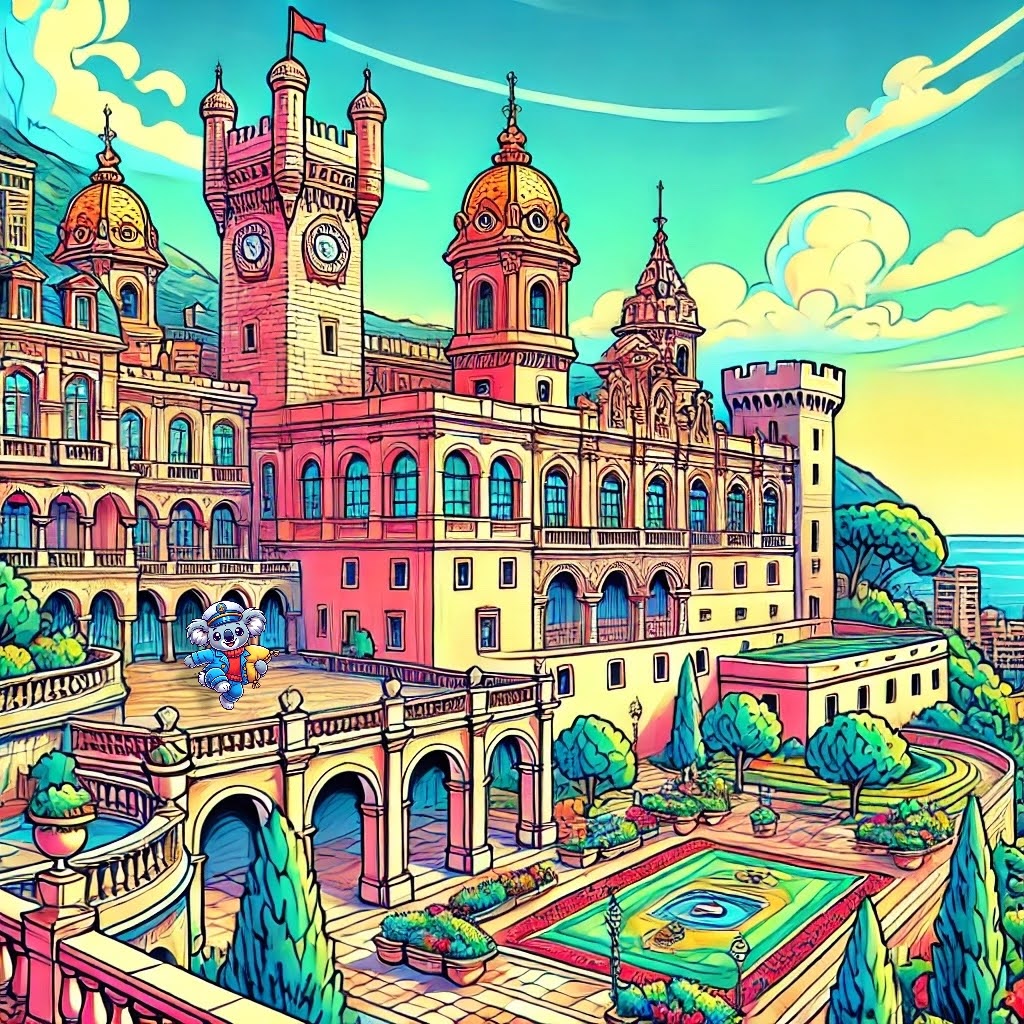
🌍 What Is a City-State?
A city-state is a fully independent country that consists of just one city and the land immediately around it. Unlike large countries with thousands of towns and villages, city-states are tiny—sometimes even smaller than a single neighborhood!
City-states have:
- Their own borders
- A national government
- A unique flag, currency, and passport
- International recognition as a sovereign nation
🗺️ Famous Modern City-States and Microstates
Here are some countries that function like cities, but are recognized all around the world:
🇲🇨 Monaco
- Location: Southern Europe, along the Mediterranean coast, bordered entirely by France.
- Size: Just 2.1 square kilometers (smaller than New York’s Central Park!).
- Population: About 38,000 people—making it one of the most densely populated countries on Earth.
- Capital: Monaco is both the country and the capital—there are no other cities inside!
- Geography: Built into rocky cliffs along the sea, Monaco has steep hills, winding roads, and very limited space, so homes, gardens, and roads are built vertically on terraces and slopes.
- Why it matters: Famous for its royal family, fast cars (Grand Prix), and luxury lifestyle.
🇻🇦 Vatican City
- The world’s smallest country, just 0.49 square kilometers.
- Inside Rome, Italy.
- Center of the Roman Catholic Church.
🇸🇬 Singapore
- An island city-state in Southeast Asia.
- Combines skyscrapers, forests, and beaches in a single urban area.
- One of the most advanced cities in the world.
🇸🇲 San Marino
- A hilltop city-state surrounded by Italy.
- One of the oldest countries in Europe.
🧭 Why Do City-States Exist?
Many of today’s microstates began as powerful cities in ancient or medieval times. Thanks to:
- Geography (natural borders like seas or mountains)
- Strategic locations (trade routes, ports)
- Historic treaties and alliances
- And strong cultural identity
…these cities remained independent while surrounding regions grew into larger nations.
They are often:
- Economically powerful (tourism, banking, luxury goods)
- Culturally rich
- Politically neutral
📌 Spotlight on Monaco: The Geography Behind the Glamour
Monaco may be tiny, but it’s a geographical wonder. Here’s why:
- Coastal Location: Sitting on the French Riviera, Monaco has stunning beaches and cliffside views of the Mediterranean.
- Rocky Terrain: The entire country is built into steep cliffs. Buildings are stacked on hills, and elevators connect different street levels.
- Land Reclamation: Because Monaco is out of space, it’s been building more! Entire neighborhoods like Fontvieille were created by expanding the land into the sea.
- No Farmland: Monaco has no agriculture—it imports almost all its food.
- Urban-Only Nation: Nearly 100% of the land is urbanized—there are no forests, lakes, or rural towns.
And yet, Monaco has:
- Its own monarchy (the Grimaldi family)
- A full government and constitution
- A seat at the United Nations
- More tourists per square meter than nearly any other place in the world!
🧠 Why It’s Great for Learning
Studying city-states like Monaco helps kids:
- Understand how geography affects politics and city design
- Explore how land is used in creative ways
- Compare urban vs. rural life
- Learn how borders, nations, and identities can be tiny but powerful
🧳 Would You Live in a City-Country?
Imagine:
- Walking across your entire country in 45 minutes
- Seeing a royal palace, race car track, and beach all in one afternoon
- Living in a place where space is so precious, every rooftop might have a garden or pool!
That’s Monaco.

 Captain Pillowbelly's Adventures