
Ahoy Crew,
Have you ever wondered why deserts are filled with sand instead of grass, trees, or snow?
It’s a good question—because when you look out over a desert like the Rub’ al Khali (the Empty Quarter in Saudi Arabia), it almost feels like an ocean made of gold. The dunes stretch as far as the eye can see, rolling and shifting with the wind.
But how did all that sand get there? And why do deserts have so much of it?
Let’s dig into the mystery—without getting it in our shoes!
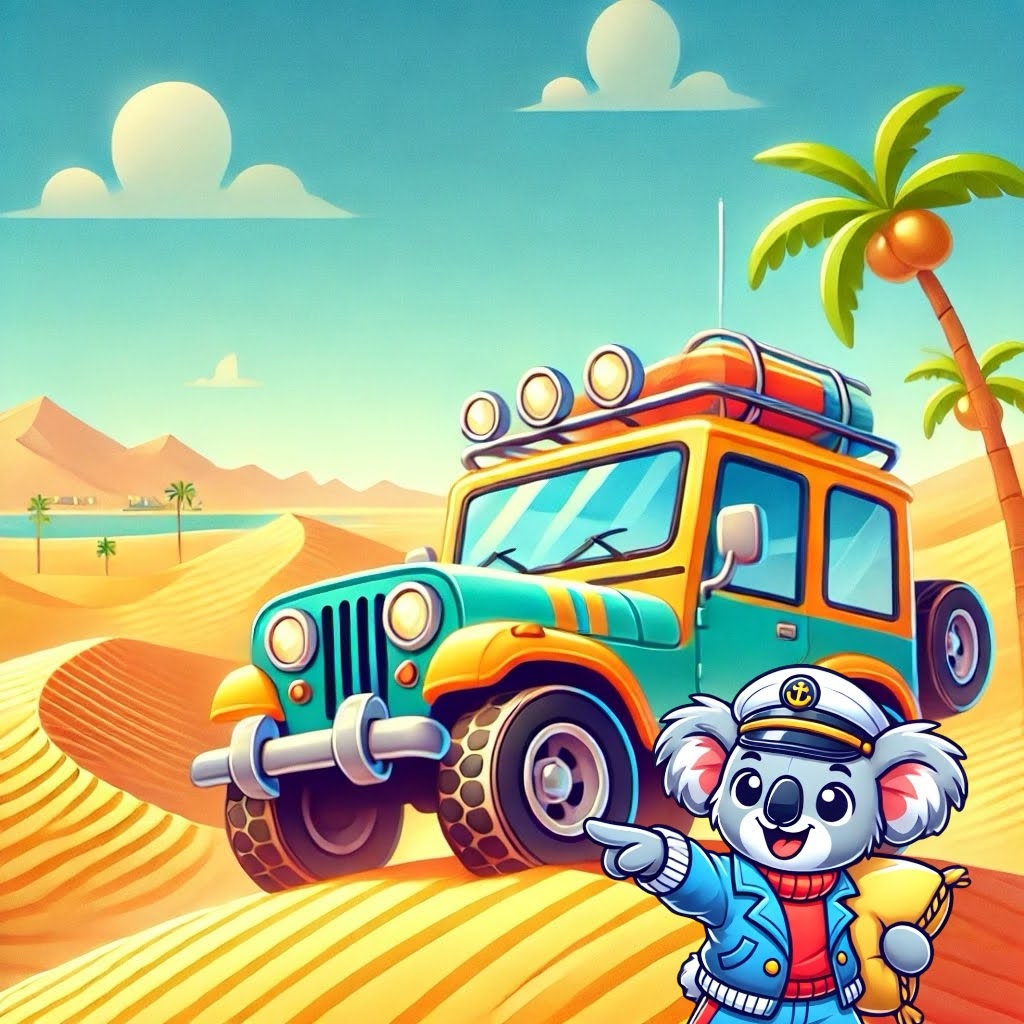
🌞 What Makes a Desert a Desert?
First things first: a desert isn’t just a place that’s hot. It’s a place that’s dry.
Deserts get very little rain—usually less than 25 centimeters (10 inches) a year. Because of that, they don’t have many trees or thick grass. What grows there has to be tough, like spiky cactus or tiny shrubs that can survive without much water.
The sun is often blazing, the sky is usually clear, and the wind… well, the wind is part of the secret of sand.
🪨 Where Does the Sand Come From?
Long ago, the land that is now desert used to have mountains, rocks, and even rivers. Over time, wind and weather broke down those rocks into smaller and smaller pieces.
- Big rocks became small rocks
- Small rocks became pebbles
- Pebbles became grains of sand
That process is called erosion. It’s like nature using sandpaper for thousands of years!
Once the sand is loose, the wind picks it up and moves it—creating hills, waves, and dunes.
🌬️ Why Are There Sand Dunes?
In some deserts, like the Empty Quarter, the wind is strong and constant. It blows sand into huge piles, forming what we call dunes.
- Some dunes are small and bumpy
- Others are tall as buildings
- They’re always shifting and moving, depending on the wind
That’s why desert explorers sometimes say the dunes “walk” over time!
❄️ Are All Deserts Sandy?
Nope! Not all deserts are full of sand. Some are made of:
- Bare rock
- Pebbles and gravel
- Salt flats
- Even snow and ice (like Antarctica—it’s actually the coldest desert!)
But sandy deserts, like the ones in Saudi Arabia and northern Africa, are the ones we usually think of when we hear the word “desert.”
🐾 Sand Facts for Curious Kids:
- Sand is made mostly of tiny pieces of quartz, a hard mineral.
- Some deserts have red sand (from iron), white sand (from crushed shells), or even black sand (from volcanic rocks).
- The Rub’ al Khali is the largest continuous sand desert in the world.
- You can hear some dunes “sing” or “boom” when the wind hits them just right!
Try This With Your Crew:
🏜️ Fill a tray with sand and try blowing across it with a straw—can you make your own tiny dune?
🪨 Collect small rocks and guess how long it might take them to turn into sand!
📚 Read about desert animals that use sand to hide, like lizards, snakes, or beetles.
So next time you see a desert, remember: every grain of sand was once part of a mighty mountain—and every dune is shaped by wind, time, and nature’s slow, quiet work.
Pretty amazing, right?
See you tomorrow to explore more about Saudi Arabia!!
– Captain PillowBelly

 Captain Pillowbelly's Adventures