
Flying with children can be a daunting experience for many parents, especially when faced with long international flights or even just managing a short hop between cities. As a family that has spent time living in Singapore, we’ve experienced our fair share of flights, particularly long hauls to Europe to visit family and friends. Through trial and error, we’ve learned a few key strategies that can make flying with children—whether babies, toddlers, or young kids—much more manageable.
In this post, we’ll break down some tips and tricks for flying with children based on three age categories: a) babies, b) young toddlers, and c) older children. We’ll also share specific advice for both short-distance flights and intercontinental journeys.
1. Flying with Babies (0-12 months)
Babies are often the easiest age group to travel with because they don’t need to move around much, but they do require a lot of attention and care. Here are some tips for flying with infants:
Short-Distance Flights:
- Feed during takeoff and landing: The change in air pressure can be uncomfortable for babies’ ears. Nursing, bottle-feeding, or giving them a pacifier during takeoff and landing helps relieve ear pressure.
- Bring a carrier or sling: Babies often feel more comfortable being close to you. A soft baby carrier or sling allows your hands to stay free while keeping your little one cozy and settled.
- Pack extra essentials: Babies can be unpredictable, so pack extra diapers, wipes, clothes, and bottles. Even on short flights, you’ll want to be prepared for any surprises.
Intercontinental Flights:
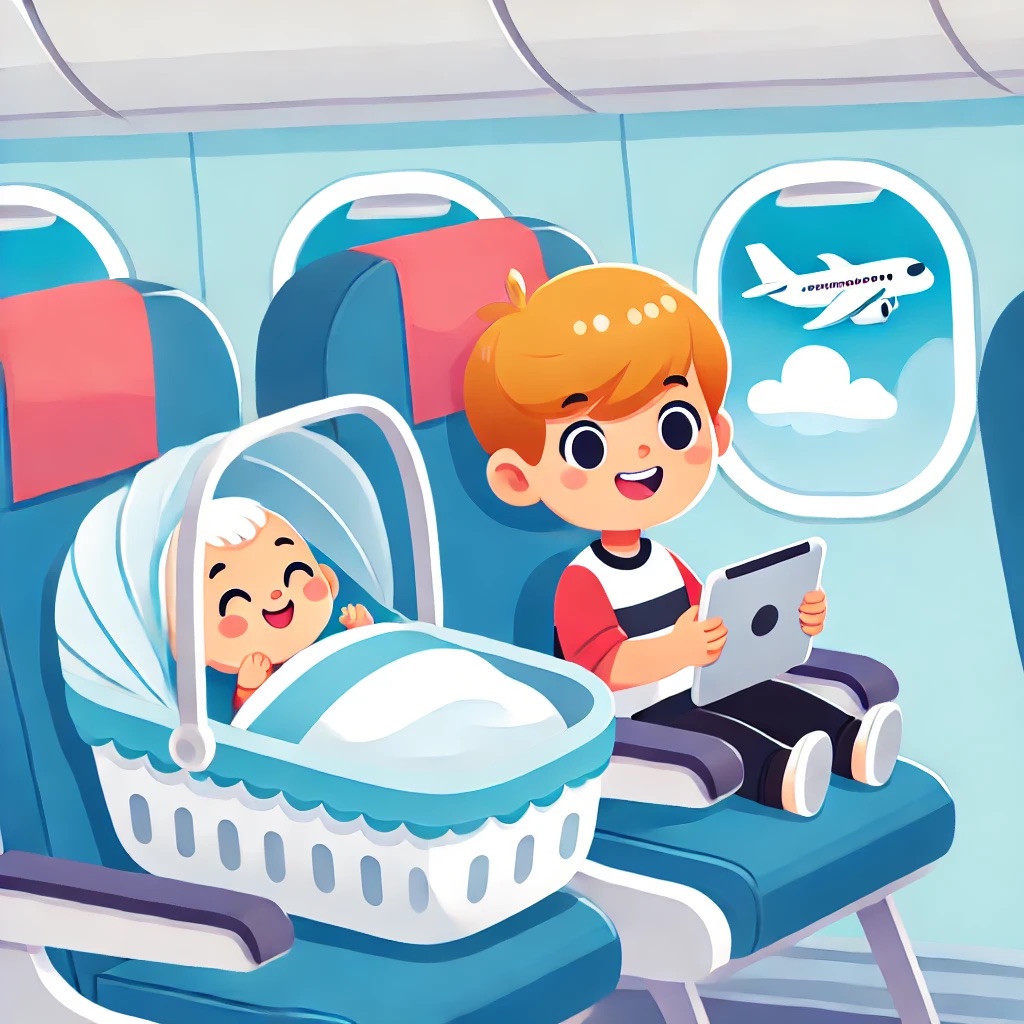
- Request a bassinet seat: On long-haul flights, many airlines offer bassinet seats for babies under a certain weight. These can be a lifesaver, allowing your baby to sleep comfortably while freeing up your arms.
- Keep the diaper bag organized: For long flights, it’s important to stay organized. Use separate compartments for essentials like diapers, wipes, and baby snacks so you can easily grab what you need.
- Stick to your routine: If possible, try to stick to your baby’s sleep and feeding schedule, even in a different time zone. Familiar routines can help them adjust more easily to the flight.
2. Flying with Young Toddlers (1-3 years)
Toddlers can be a handful on flights because they’re full of energy and curiosity, but they may not yet understand the need to sit still. Keeping them entertained and comfortable is key.
Short-Distance Flights:
- Bring plenty of snacks: Toddlers can get cranky when hungry, and airplane snacks might not be their favorite. Pack healthy snacks like fruit, crackers, or small sandwiches to keep them happy.
- Pack small, quiet toys: A few small toys, such as coloring books, stickers, or soft figurines, can keep them entertained during short flights. Avoid toys that make noise to avoid disturbing fellow passengers.
- Let them burn energy at the airport: Before boarding, let your toddler walk around or play in designated kids’ areas at the airport. This can help them get out their energy before they have to sit still on the plane.
Intercontinental Flights:
- Break out new toys: For long-haul flights, bring along a couple of “surprise” toys your toddler hasn’t seen before. These can help capture their attention when they start to get restless.
- Use electronics wisely: While screen time is often limited at home, flights are a great time to relax those rules. Download a few favorite shows or age-appropriate games on a tablet. Many airlines also offer inflight entertainment for kids.
- Bring a comfort item: Whether it’s a favorite stuffed animal or a blanket, having something familiar from home can help comfort your toddler when it’s time to nap on the plane.
- Take breaks by walking the aisle: When your toddler gets fidgety, take short walks up and down the aisle (when allowed). This can help them stretch their legs and satisfy their curiosity.
3. Flying with Older Children (4+ years)
Older children are generally easier to fly with because they can understand instructions and are more patient. However, they still need plenty of entertainment to make the flight enjoyable.
Short-Distance Flights:
- Involve them in the travel process: Give older children some responsibility, such as carrying their own backpack with snacks and activities. This can make them feel more engaged and excited about the journey.
- Pack creative activities: Small games, drawing pads, or simple crafts can keep older kids entertained on short flights. Consider travel-sized puzzles or coloring books.
- Prepare them for the flight: Explain what will happen during the flight, especially if it’s their first time. Knowing what to expect can help them feel more comfortable and excited.
Intercontinental Flights:
- Load up on entertainment: Long flights can feel endless for kids. Load a tablet with their favorite movies, games, and educational apps to keep them occupied for hours. Many long-haul flights also have kid-friendly inflight entertainment.
- Encourage sleep: If your flight coincides with your child’s regular sleep schedule, bring a neck pillow, blanket, and an eye mask to help them get some rest. Creating a cozy space will encourage them to relax and sleep during the flight.
- Play travel games: If your child needs a break from screens, introduce simple travel games like “I Spy,” card games, or drawing challenges. This can help break up the monotony of a long flight.
- Stay hydrated and stretch: Encourage your child to drink water throughout the flight and take short walks in the aisle to stretch their legs and avoid stiffness.
Our Experience: International Flights from Singapore
Having lived in Singapore, we’ve had plenty of experience with international flights, particularly long-haul trips to Europe to visit family and friends. These flights, often 12 hours or longer, can be challenging, but we’ve learned that preparation is key. Whether we’re flying with a baby, toddler, or older child, the same basic principles apply: plan ahead, pack strategically, and stay flexible.
For international flights, especially with multiple children, we always make sure to have a mix of familiar comforts (like snacks and toys) and new surprises to keep things fresh and engaging. We also try to maintain as much of their regular sleep routine as possible, especially for those long overnight flights.
Flying with children isn’t always easy, but with the right strategies, you can make the experience much more manageable—and even enjoyable.
Final Thoughts: Preparing for a Smooth Flight
No matter your child’s age, flying with kids requires patience, preparation, and flexibility. Each age group presents its own challenges, but with a few key strategies, you can make the journey smoother and more enjoyable for everyone. From keeping babies comfortable to entertaining toddlers and older children, it’s all about finding the right balance of preparation and flexibility.
Whether you’re embarking on a short hop or a long intercontinental flight, remember that it’s all part of the adventure! With a bit of creativity and some forward planning, you can help make flying with children a positive experience.
Safe travels!

 Captain Pillowbelly's Adventures